
The True Price of Play: Unpacking the Hidden Costs of Cheap Imported Toys
Understand the hidden environmental and human costs behind cheap, imported toys and why choosing high-quality, ethically made Indian toys is a better choice for your child and the planet.
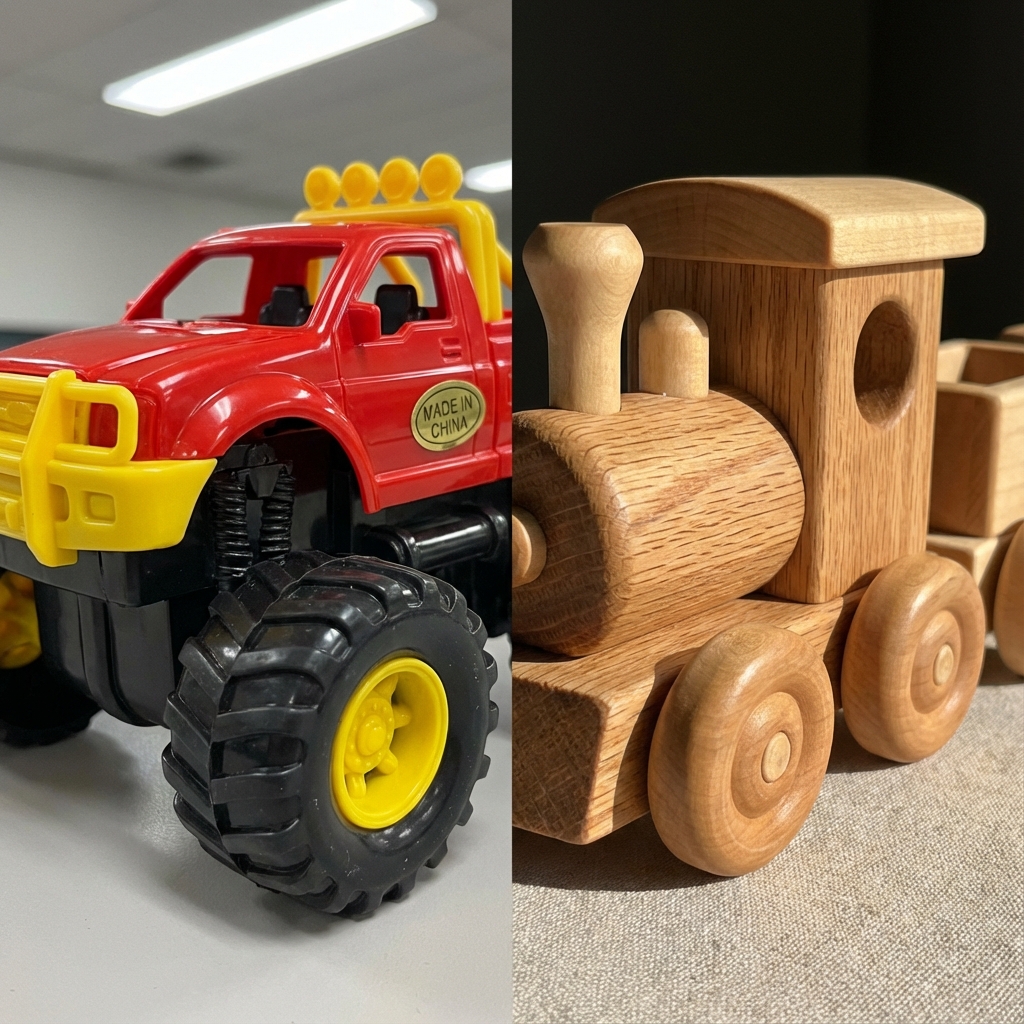
Take a moment and look at these two toys. One is priced significantly lower than the other.
Which one would you buy?
Wait. Don’t make that decision just yet. Before you reach for the cheaper option, there are a lot of hidden factors you deserve to know.
When a toy is built to last, it lives longer, meaning less wastage. When it’s made from high-quality materials, it’s often more readily recyclable. When the price reflects true costs, it means the labourers were paid ethically. And when it’s manufactured locally, it means a drastically smaller carbon footprint.
Do you want to know why you should care? Read on.
1. ♻️ The Real Cost of Cheap Plastics: Waste and Environmental Health
The fundamental quality of the materials used in a toy determines its lifespan and its ultimate fate in the waste stream. Cheaper manufacturing almost always equates to a disposable product, creating massive environmental strain.
🗑️ The Durability-to-Waste Cycle
Lower-cost imported toys are often made with inferior, brittle plastics that are prone to breaking easily. When a toy snaps within weeks, it quickly becomes landfill fodder. This rapid durability-to-waste cycle is unsustainable, contributing to the growing problem of municipal solid waste and plastic pollution in India.
🔄 Recyclability Challenges
High-quality manufacturers, especially those focusing on ethical production, are more likely to use plastics that are single-polymer or materials that are certified non-toxic and easily recyclable. Cheaper imports often use complex, mixed-polymer plastics or contain additives that make them difficult, if not impossible, to process through standard recycling streams.
Choosing a durable, quality ‘Made in India’ toy means:
- Less Waste: The toy lasts longer, reducing the need for replacements.
- Better End-of-Life: The materials used are often selected with recyclability in mind, promoting a circular economy over a purely linear one.
2. 🤝 The Human Cost of Cheap Toys: Labor Practices and Wages
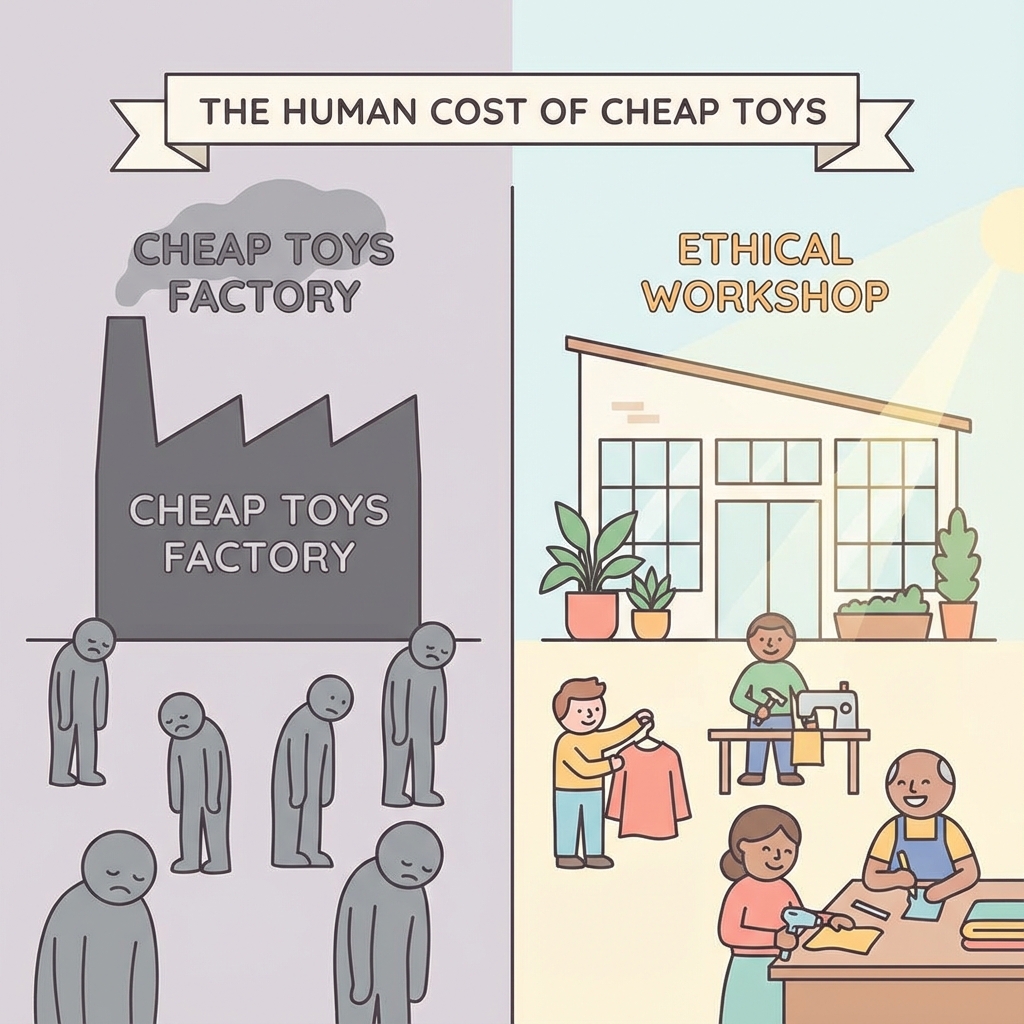
A product’s price is a direct reflection of its entire supply chain. If a toy is priced unsustainably low, it often means corners are being cut—and those cuts are frequently made at the expense of workers.
😔 The Dark Side of Mass Production
Many massive, overseas manufacturing hubs operate on razor-thin margins, leading to widely reported issues with low wages, excessive working hours, and compromised working environments. When you buy the cheapest toy, you are inadvertently supporting a system where human cost is prioritized below profit.
Supporting Local, Ethical Livelihoods
Choosing a ‘Made in India’ toy is an ethical stand. Your purchase directly supports:
- Indian Artisans and MSMEs: Your money flows into small-to-medium enterprises and local artisan communities that are regulated by domestic labor laws and generally uphold fairer, more transparent labor practices.
- Community Empowerment: By choosing local, you are ensuring fair wages are paid within India, fostering job creation, and contributing to the economic self-reliance of Indian families.
3. 🌍 Footprint: The Environmental Toll of Global Shipping
We often forget the environmental price paid for a product to travel halfway across the world. The transportation footprint of cheap imports is substantial and contributes significantly to climate change.
🚢 The Carbon Cost of Imports
Most imported toys travel thousands of kilometers by cargo ship. This form of long-distance shipping is a major contributor to global greenhouse gas emissions.
🌱 The Advantage of a Local Supply Chain
The ‘Made in India’ choice is inherently the greener one for the Indian consumer:
- Lower Emissions: A toy manufactured and distributed within the subcontinent has a drastically smaller carbon footprint because the entire supply chain—from raw material to your home—is localized.
- Sustainable Materials Focus: Many Indian manufacturers prioritize sustainable and natural materials (like wood or natural dyes), further reducing overall environmental impact.
4. 👶 Last but Certainly Not Least: The Health Risk of Toxicity
While the previous points cover ethical and environmental integrity, this section covers the most critical and non-negotiable hidden cost: the physical safety of your child. A bargain price often indicates that manufacturers have bypassed critical health and safety checks.
🧪 Hazardous Chemicals Lurk
Studies, including those conducted by the Quality Council of India (QCI), have found that nearly 67% of imported toys failed Indian safety standards on various parameters. This non-compliance often stems from the presence of toxic substances that are strictly restricted or banned in quality products:
- Lead-Based Paints: Used for cheap, vibrant colors, lead is a known neurotoxin and its ingestion (through the inevitable mouthing of toys) can cause severe, lasting developmental issues.
- Phthalates: These chemicals are used to soften cheap plastics. They are linked to potential hormonal and developmental problems.
The Indian Advantage: The ISI Mark of Trust
Indian manufacturers are legally bound to adhere to the rigorous standards of the Bureau of Indian Standards (BIS) Quality Control Order (QCO). When you see the mandatory ISI Mark on an Indian toy, you have the assurance that the product has undergone stringent testing for both chemical composition and mechanical safety. You are not just buying a toy; you are investing in protection and peace of mind.
Conclusion: Investing in a Safer, Greener, and Fairer Future
Next time you hold a high-quality, Indian-made toy and see a slightly higher price tag, remember the hidden costs you are avoiding:
- You avoid contributing to plastic waste and poor recyclability.
- You avoid supporting unethical labor practices.
- You avoid unnecessary global carbon emissions.
- Crucially, you avoid the risk of toxic chemicals in your child’s hands.
The higher price is simply the true, ethical cost of a product that is safe, environmentally conscious, and supports our local economy.
Make a conscious choice for your child’s health and our nation’s future. Choose the ISI mark. Choose ‘Made in India’.